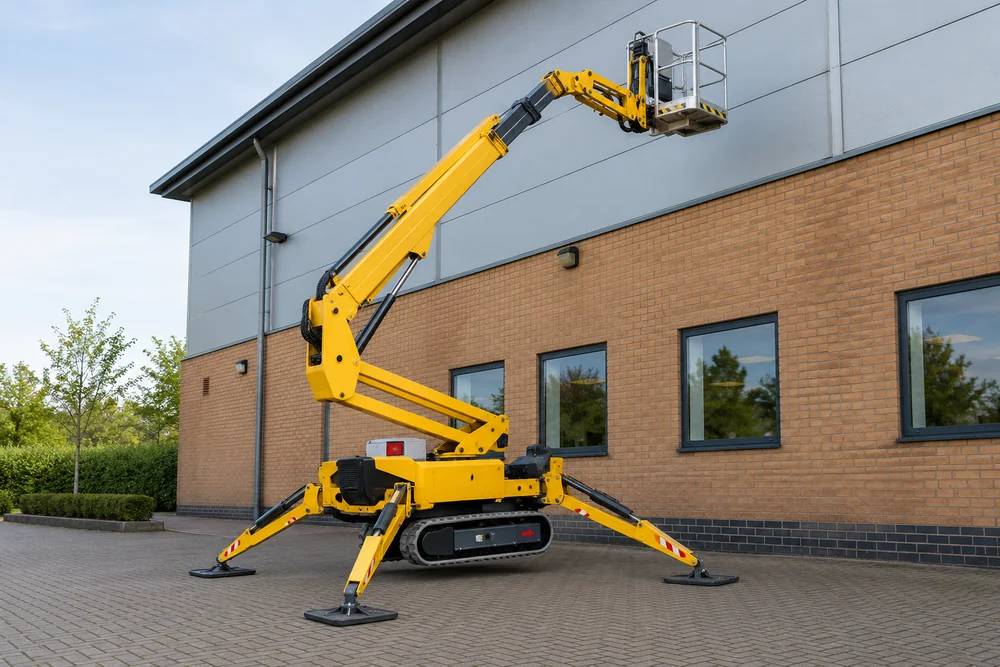
Compact Travel, Planned Setup
A spider lift is commonly a tracked boom platform supported on stabilising outriggers for work. Its compact travel configuration can help it pass through routes that are unsuitable for a larger self-propelled boom. It still needs sufficient space and ground support when the stabilisers are deployed.
Typical enquiries include commercial courtyards, atriums, halls and building elevations reached through a narrow passage. Describe the entire route, including turns and any changes in level. A machine that fits the first doorway can still be unsuitable if it cannot turn into the work area or safely spread its outriggers.
Check Width, Height And Travel Weight
Ask for the dimensions of the proposed machine in its actual travel configuration. Folding or removable components may change the size, but these arrangements must follow the manufacturer’s method. Include door furniture, overhead services and protective floor coverings when measuring the available clearance.
Tracked equipment is not automatically light enough for every internal floor. Ask for the machine mass and relevant track and outrigger loads so a competent person can assess the route and setup surface. Suspended slabs, basements, access chambers and decorative paving may all need a closer check.
Outriggers Need Their Own Space
The operating footprint is larger than the compact stowed machine. Measure the clear setup area and tell the supplier about walls, steps, planters or fixed equipment near the proposed stabiliser positions. Some models have different setup options, but these can change the permitted working envelope.
Outrigger pads or spreader arrangements need to suit the applied loads and supporting surface. They are not a cure for unknown ground conditions. Keep people clear of setup and movement areas, and check that access to emergency controls stays available after barriers and equipment are in position.
Indoor And Sensitive Commercial Settings
For enclosed buildings, the power source needs to suit the ventilation and site rules. Ask whether a suitable electric or battery configuration is available, and check any power supply requirements. Discuss floor protection and access restrictions without assuming that tracks or tyres will leave every finish unaffected.
Occupied buildings also need an agreed method for separating the task from normal activity. An atrium may have several levels overlooking the work, while a commercial courtyard may contain fire exits or delivery routes. The lifting plan and barriers must account for those movements before the platform is raised.
From Site Details To Delivery
Send the postcode, work height, horizontal reach and expected basket load. Provide measurements and photographs of the narrowest points, plus a sketch of the setup area. Explain any stairs, ramps or surfaces that may prevent machine travel, rather than assuming the platform can negotiate them.
The supplier can then check a model, its route and its stabiliser arrangement. Confirm operator requirements, transport access and site induction arrangements before delivery. At handover, review the controls, instructions and examination report, then check the planned emergency lowering and rescue method with the responsible people.
What Affects Spider Lift Hire Cost?
Reach, machine dimensions, power configuration and hire length all affect the quotation. Restricted delivery windows, specialist transport arrangements and operator provision can also matter. Where a site visit or further assessment is needed, agree the scope and any associated cost before committing.
Allow time for controlled movement through the building and proper setup. A compact machine can involve more preparation than a conventional boom in an open yard. Ask for the total hire arrangement, including transport, collection, extensions and damage terms, so the programme and budget reflect the actual access challenge.
Safety And Hire Responsibilities
The Provision and Use of Work Equipment Regulations 1998 (PUWER) cover suitable equipment, maintenance and adequate instruction. The Lifting Operations and Lifting Equipment Regulations 1998 (LOLER) also apply to relevant lifting equipment and operations. See the HSE work equipment overview and thorough examination guidance.
For people access, confirm a current thorough examination report as well as routine checks. HSE sets a six-month interval for equipment lifting people unless a competent person’s examination scheme specifies otherwise (HSE). A valid report does not replace daily checks or a safe system of work.
Spider Lift Hire FAQs
Will A Spider Lift Fit Through My Doorway?
A spider lift will fit through a doorway only if the exact machine’s travel dimensions suit the measured opening and onward route. Check height, width, turns and floor capacity, including door furniture and ramps. Give the supplier photographs and measurements rather than relying on a general description such as standard doorway.
Can A Spider Lift Operate On A Suspended Floor?
A spider lift can operate on a suspended floor only after its travel and outrigger loads have been assessed against the structure’s capacity. Obtain the machine load information and suitable structural advice before booking. A small footprint does not prove that the floor can support concentrated loads during setup or operation.